The Charm of Spending a Weekend at an Irish Pub in NYC
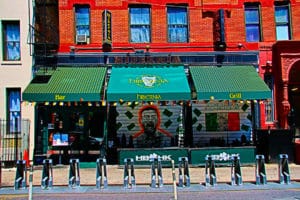
There are faster ways to spend a weekend in New York. There are trendier neighborhoods, louder rooms, harder reservations, and cocktails that arrive under a haze of smoke or balanced on a slab of carved ice. Yet for a certain kind of weekend, especially one that asks less of you and gives more back, the Irish pub remains one of the city’s most dependable pleasures.
An Irish pub in NYC offers something that many polished hospitality concepts chase and rarely achieve: ease. You walk in without rehearsing the evening. You can stay for one pint or five hours. You can come dressed for the rain, for a date, for a football match, or after a long shift. The room makes space for all of it. That flexibility is part of the charm, but only part. The deeper appeal is emotional. These pubs do not merely serve food and drink. At their best, they provide tempo, familiarity, and a sense that the city has briefly agreed to slow down.
That matters in New York, where almost everything feels timed, optimized, or overbooked. The right pub breaks that rhythm. It gives you a place where the wood has picked up decades of conversation, where the bartender remembers both regulars and newcomers, and where no one seems embarrassed by the old pleasures of a stout poured properly, a bowl of stew, live music played close enough to feel, and a table that somehow keeps expanding as more friends arrive.
Why the Irish pub still works in New York
New York has always had an appetite for institutions that hold their shape while the city changes around them. The Irish pub is one of those institutions. Some are ornate and old-school, with etched glass, dark timber, brass rails, and framed county crests. Others are simpler, almost spare, relying on a good pint, clean lines of sight to the bar, and a back room that fills as the night goes on. Either way, the format travels well because it satisfies several needs at once.
It is a neighborhood anchor, a social equalizer, a place to eat late, watch a match, wait out bad weather, or meet people with minimal ceremony. Unlike many destination bars, a pub does not demand a special occasion. In fact, it tends to improve ordinary time. Friday after work feels less transactional. Saturday afternoon becomes an event without becoming a project. Sunday evening, usually the saddest stretch of the weekend, softens around the edges.
There is also the matter of hospitality style. In a good Irish pub, service has a directness that reads as confidence. You are welcomed, but not smothered. The room is looked after, but not choreographed within an inch of its life. You are expected to enjoy yourself without making the place revolve around you. For many New Yorkers, that balance feels almost luxurious.
Friday night, when the city exhales
The weekend often begins at the bar before it begins anywhere else. By six o’clock on a Friday, an Irish pub in NYC becomes one of the most interesting rooms in town because it gathers people at the moment their week starts to fall away. You see office workers loosening ties, hospital staff finally sitting down, couples negotiating what kind of night they want, and solo regulars claiming familiar stools with the relief of ritual.
The beauty of Friday in a pub is that nothing dramatic has to happen for the night to feel full. One round turns into two. Someone orders a plate of chips for the table, then fish and chips, then perhaps a shepherd’s pie because the kitchen is still open and everyone realizes they are hungrier than expected. If there is music, it usually lands better here than in a formal venue. Music in a pub does not need your full concentration to matter. It can score the room rather than dominate it.
A well-run pub on a Friday manages a tricky balance. It feels busy without turning hostile. The staff move quickly, but not sharply. The crowd is mixed enough that the room never becomes too self-conscious. That is an underrated point. Plenty of bars in New York become trapped by their own image. A pub, when it is healthy, resists that trap. It lets people have their evening rather than perform one.
The small rituals that make the experience
The charm is rarely one grand gesture. It is the accumulation of details. The first sip of Guinness after it settles properly. The way condensation gathers on a glass near the window while the sidewalks shine with recent rain. The bartender setting down a bowl of peanuts or checking whether you want another before you ask. The low clatter from the kitchen. The muted televisions above the bar showing rugby, hurling, Premier League football, or a Yankees game, depending on the hour and the crowd.
These rituals matter because they make the place legible. You understand how to be there. Even first-time guests pick up the cues quickly. Order at the bar or flag a server, depending on the house. Do not rush the stout. Make room when the crowd thickens. If live music starts, either listen properly or move your conversation a notch quieter. It is a social environment with a shared grammar, and that grammar is one reason people return.
Food plays a larger role than some outsiders expect. The best pub menus are not merely functional. They are strategic. Salt and starch support a long evening. Comfort dishes reward staying put. A really good curry fries plate, a steak sandwich done without fuss, or a Sunday roast served hot and generously can carry a whole afternoon. In a city where many bars treat food as an obligation, pubs often treat it as part of the contract.
Saturday afternoon belongs to the pub
If Friday is release, Saturday is expansion. This is when the Irish pub becomes more than a place for drinks. It turns into a day room for the city. The afternoon crowd can be one of the great pleasures of New York, especially during autumn and winter, when the outdoors feel theatrical but not comfortable for long.
A Saturday pub session can begin almost accidentally. You stop in for lunch after a walk through Midtown, the West Village, the Upper East Side, or Long Island City. Someone suggests one pint. Then a match is on. Then the weather turns. Then a friend texts that they are nearby. Before long, your table has anchored the day.
This is where layout and acoustics matter more than people realize. The strongest pubs have zones. There is the front bar for regular traffic, the middle area for people eating, perhaps a side room for larger groups, and corners where couples can disappear into conversation without feeling marooned. New York spaces are often narrow and loud, but experienced pub operators know how to break a room into usable pockets. The result is a place that feels social without forcing every guest into the same mood.
Day drinking in a pub also carries fewer risks than in bars built around excess. That may sound strange, but the structure helps. Food is expected. Pacing is easier. The atmosphere encourages lingering rather than chasing intensity. You can have two pints over two hours and feel entirely in step with the room. Or you can stay all afternoon, provided you know your limits and order accordingly. The setting rewards judgment.
What separates a real favorite from a generic bar with Celtic wallpaper
New York has no shortage of places that can pour a pint and hang a tricolor. That does not make them memorable. The difference between a passable pub and one worth building a weekend around usually comes down to a few qualities that experienced regulars notice immediately.
- The room feels lived in, not manufactured
- The pint is poured with care and consistency
- The staff control the energy without showing strain
- The food is reliable enough to recommend without hesitation
- The crowd includes actual regulars, not just one-time traffic
That last point is more important than design. A room with regulars has social proof you cannot fake. It means people trust the place with their recurring time, not just a single celebratory night. In hospitality terms, that is the hardest loyalty to earn.
You can often tell within ten minutes whether a pub has that foundation. Watch how the bartender greets familiar faces. Notice whether tables are turning frantically or settling in. Listen for conversation volume. A good pub is loud in layers, not in a single punishing blast. You should hear laughter, glasses, music, and fragments of talk, while still being able to hold your own conversation without shouting.
The comfort of being known, even a little
One of the understated pleasures of pub culture is partial familiarity. You do not need to be a lifelong regular to benefit from it. Come two or three times, order thoughtfully, tip fairly, and the place begins to open. The bartender may remember your drink. A server might steer you toward the better seat when the back room frees up. You start to notice who arrives at the same hour each week, who always watches the early match, who prefers the quiet edge of the bar.
In a city that can feel anonymous despite constant proximity, this light-touch recognition has real value. It offers belonging without pressure. No one asks you to join a club. No one demands a backstory. You simply become one of the known faces in the orbit of the room.
That low-stakes community is particularly welcome on solo visits. Plenty of New Yorkers are comfortable eating and drinking alone, but not every venue supports it gracefully. An Irish pub usually does. You can sit at the bar with a newspaper, a book, or your own thoughts and never feel out of place. Someone may start a conversation about the match or the weather, and if you are not in the mood, the culture generally respects that too.
Sunday, when the pub becomes almost restorative
Sunday is where the charm turns deepest. New York on a Sunday can go two ways. It can feel spacious and full of possibility, or it can carry a low hum of dread about the coming week. The pub is one of the few venues that addresses both moods.
A Sunday afternoon in an Irish pub has a softness to it. Families come in for late lunch. Couples linger over one more coffee or one more pint. Sports fill the screens. Roasts, pies, and soups do brisk business. The pace is slower, the edges less sharp. Even the light seems different, especially in older rooms where amber lamps and wood surfaces flatten the distinction between day and evening.
If you have overdone Saturday, Sunday in a pub can be a form of repair. Order tea, soda bread, soup, or something fried and sustaining. Sit in a booth and let the room carry you for a while. The appeal is not glamorous, but it is real. Hospitality at its best often looks like competence, warmth, and the removal of small frictions. A pub that gets Sunday right understands that people are not always there to celebrate. Sometimes they are there to recover, regroup, and postpone Monday for another hour.
There is also a special pleasure in leaving a pub on a Sunday evening. The air outside feels cooler. The city has quieted just enough. You have not chased the weekend. You have inhabited it.
Food, drink, and the economics of staying put
Part of the lasting appeal of an Irish pub in NYC is practical. New York weekends are expensive, and many nightlife experiences now feel engineered to extract maximum spend in minimal time. Pubs tend to offer a better bargain, not because they are cheap in absolute terms, but because they support duration.
A solid meal, two pints, and a few hours at a table often feel more satisfying than spending the same amount bouncing between venues. Even in neighborhoods where prices have climbed sharply, the pub format remains relatively honest. You understand what you are paying for. There is less theater around the bill.
That said, not every pub is a bargain, and not every famous one is worth the wait. Some high-profile Manhattan locations trade on legacy while delivering crowded conditions, indifferent food, or tourist-heavy energy that overwhelms any sense of intimacy. Others, sometimes a few blocks away, operate with far more care but less noise around their name. Experience usually favors the latter.
If you are planning a weekend session, a bit of judgment goes a long way.
- Go slightly earlier than peak time if you want a real seat
- Eat before the room gets too busy for thoughtful ordering
- If live music matters, confirm the schedule rather than assuming
- For sports-heavy weekends, expect standing-room conditions
- Choose the pub to match the mood, lively front bar or quieter dining room
These are not strict rules, just practical habits. A pub rewards flexibility. If your first choice is rammed, the city gives you another within walking distance in many neighborhoods. In fact, pub-hopping in New York works best when it is modest. Two places is plenty. More than that, and you lose the sense of settling in that makes the experience worthwhile.
The many versions of the New York Irish pub
It is tempting to talk about the Irish pub as though it were a single type, but New York supports several versions, each with its own charm. There are polished Midtown rooms that serve office workers, theater crowds, and tourists with impressive efficiency. There are old neighborhood bars in Queens and the Bronx where the accent at the bar might shift depending on the football score. There are downtown pubs with literary ambitions, uptown holdouts with deep local roots, and newer spots that blend pub tradition with a stronger kitchen or a more contemporary drinks list.
This variety is part of the point. The phrase Irish Pub NYC does not describe one room. It describes a hospitality language spoken with different accents across the city. Some pubs lean heavily into heritage. Others use the tradition more loosely, focusing on warmth, dark wood, and a roster of familiar https://gunnerfyay805.wpsuo.com/how-to-experience-the-heart-of-the-city-at-an-irish-pub-nyc beers while serving a broader crowd. Both approaches can work if they are sincere.
Authenticity, in this context, is often misunderstood. It is not solely about age, imported decor, or how many county flags hang near the ceiling. It is about whether the place behaves like a pub in the old sense: generous with time, grounded in service, built for repeat visits, and comfortable enough that people relax into themselves.
Why people return year after year
The strongest argument for spending a weekend at an Irish pub is not novelty. It is repeatability. The experience improves with familiarity. You start to associate certain places with certain seasons. The first cold Saturday that calls for stew and stout. The December evening when the windows steam up and every seat matters. The first mild Sunday in March when people crowd the doorway in lighter coats. The rainy Friday in June when the bar smells faintly of wet wool and fried food, and somehow that feels perfect.
New York changes too quickly for many people’s liking. Stores disappear, rent pushes out institutions, and beloved rooms become banks, pharmacies, or luxury lobbies. Against that background, the surviving pub carries emotional weight beyond its menu. It stands for continuity. Not fantasy, not nostalgia for its own sake, but a practical continuity of use. People still gather here. They still tell stories over pints. They still celebrate, grieve, flirt, watch, eat, and wait out the weather.
That is the real charm. A weekend in a pub is not just leisure. It is participation in one of the city’s oldest social forms. You do not need to be Irish. You do not need to know the songs. You do not need a large group or a grand plan. You only need a willingness to enter the room and let it work on you.
By the end of the weekend, what lingers is rarely the alcohol alone. It is the feeling of having been somewhere hospitable in the fullest sense of the word. Somewhere that made room for appetite, conversation, weather, chance meetings, and unhurried time. In New York, that remains a rare and lasting luxury.
Hibernia Bar
401 W 50th St
New York, NY 10019, United States
Phone: +1 212-969-9703
FAQ About Irish Pub NYC
What is the best Irish pub in NYC?
The best choice depends on your location and preferred atmosphere. Hibernia Bar is a neighborhood Irish pub in Hell's Kitchen offering Guinness, Irish whiskey, pub food, and sports viewing.
Where do Irish people go in NYC?
New York's Irish community gathers in many neighborhoods and venues. Hibernia Bar welcomes Irish expats, local residents, and visitors at 401 W 50th St, just off Ninth Avenue.
Where can I watch GAA games in New York?
Hibernia Bar lists GAA among the sports it shows. Call +1 212-969-9703 to confirm coverage and opening times for a particular match before visiting.
What is the difference between a bar and a sports bar?
A sports bar emphasizes televised games and a shared viewing atmosphere. Hibernia combines sports viewing with the food, drinks, and hospitality of a neighborhood Irish pub.